


Gold Mining Crusher
Product Overview
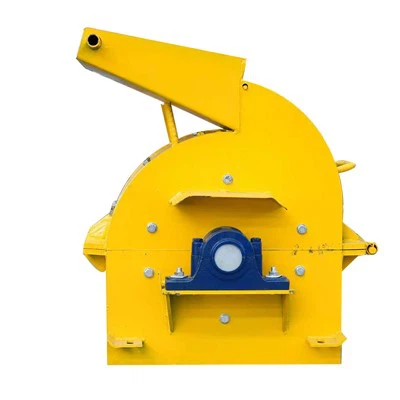
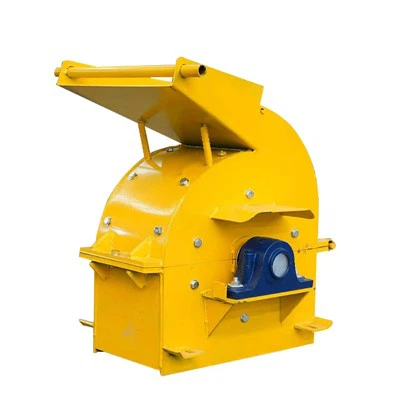
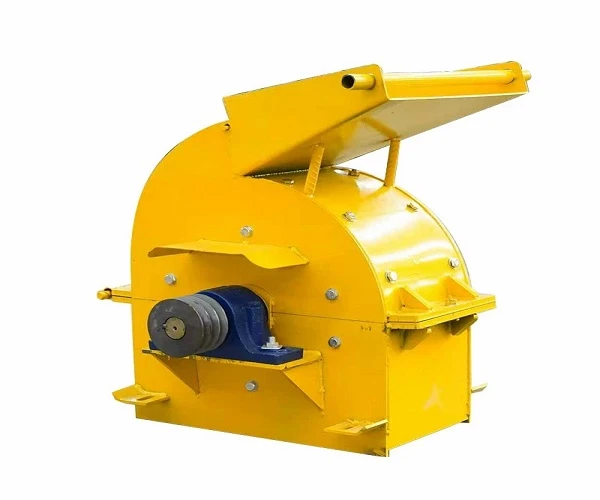
Gold mining operations demand crushing equipment capable of withstanding high-abrasion, high-hardness quartz and igneous rock formations. Our industrial crushing systems, comprising primary jaw crushers and secondary or tertiary cone crushers, are engineered specifically for gold ore size reduction ahead of grinding and leaching circuits.
Unlike standard aggregate crushers, these units feature reinforced heavy-duty frame structures, optimized crushing cavity kinematics, and high reduction ratios. They process run-of-mine gold ore ranging from 500 mm down to a closed-side setting of 10 mm, ensuring optimal liberation of gold-bearing minerals while minimizing ultra-fines generation.




Key Features and Benefits
High-Crushing Force Kinematics:
Deep crushing chambers and steeper toggle angles on jaw models or high eccentric throws on cone models generate maximum compressive stress to fracture abrasive gold-bearing quartz with Mohs hardness 7 and above.
Wear-Resistant Metallurgy:
High-stress components utilize ASTM A128 Grade Mn18Cr2 and Mn22Cr2 austenitic manganese steel. Work-hardening properties improve surface hardness under impact, extending liner service life by 30 to 40 percent compared to standard carbon steel.
Hydraulic Tramp Release and Adjustment:
Integrated hydraulic systems clear uncrushable objects such as stray drill bits or tramp iron automatically and allow rapid closed-side setting adjustment without stopping the motor, reducing downtime.
Low Specific Energy Consumption:
Optimized motor-to-throughput ratios deliver higher tonnage per kilowatt-hour, reducing operational expenditure in remote mining sites.
Applications
These industrial crushers operate reliably across diverse gold recovery flowsheets:
Hard-Rock Underground and Open-Pit Mines:
Primary and secondary reduction of quartz-vein gold ore, porphyry gold deposits, and auriferous pyrite ores.
Heap Leaching Pre-Treatment:
Crushing run-of-mine ore to a uniform P80 passing size, typically 12 mm to 25 mm, to ensure uniform lixiviant percolation through heap leaching pads.
Comminution Circuits Pre-Grinding:
Feeding semi-autogenous grinding mills, ball mills, or rod mills by reducing feed size to optimize downstream milling efficiency.
Manufacturing and Quality Control
Reliability in mineral processing stems from strict metallurgical control and precision machining:
Casting and Forging Integrity:
Main frames are fabricated from Q355B structural low-alloy steel plates, stress-relieved via high-temperature annealing furnaces prior to machining. Main shafts are forged from 42CrMo alloy steel and ultrasonically tested to ASTM A388 standards.
Precision Machining:
Large CNC floor boring and milling machines maintain bearing housing bore tolerances within 0.02 mm, eliminating dynamic shaft misalignment and bearing premature failure.

Non-Destructive Testing:
100 percent magnetic particle testing and ultrasonic testing are performed on all critical structural welds, main shafts, and pitman assemblies prior to final assembly.
Factory Acceptance Testing:
Every crusher undergoes a 4-hour no-load running test to monitor bearing temperature rise, vibration velocity, and lubrication pressure compliance before packaging.
Customization and OEM Services
We engineer crushing equipment to integrate into existing mineral processing plants or customized flows:
Cavity Options:
Selection of coarse, medium, or fine crushing cavities in EC, C, and F configurations tailored to the specific ore abrasiveness and feed gradation of your deposit.
Drive and Power Adaptation:
Custom electrical configurations compatible with site-specific power grids such as 380V, 415V, or 690V at 50Hz or 60Hz, following NEMA or IEC motor standards.
Modular Skid Mounting:
Complete crushing spreads mounted on heavy-duty structural steel skids with pre-wired control panels for rapid mobile or semi-mobile deployment.
OEM and ODM Engineering:
Full drawing packages provided in STEP or PDF formats for plant layout integration and consulting engineering validation.
Related Products and Spare Parts
Ensure continuous plant availability with our fully interchangeable replacement parts and complementary equipment:
Wear Parts:
Manganese concave rings, mantle liners, jaw plates with tooth profile and corrugated profile options, and cheek plates.
Drive and Structural Parts:
Main frames, eccentric shafts, toggle plates, heavy-duty spherical roller bearings, and bronze bushings.
Complementary Equipment:
Vibrating grizzlies, belt conveyors, and apron feeders designed for continuous-duty mineral handling.
Frequently Asked Questions